
Mesh Wi Fi vs Normal Router: Which Is Better For Flats
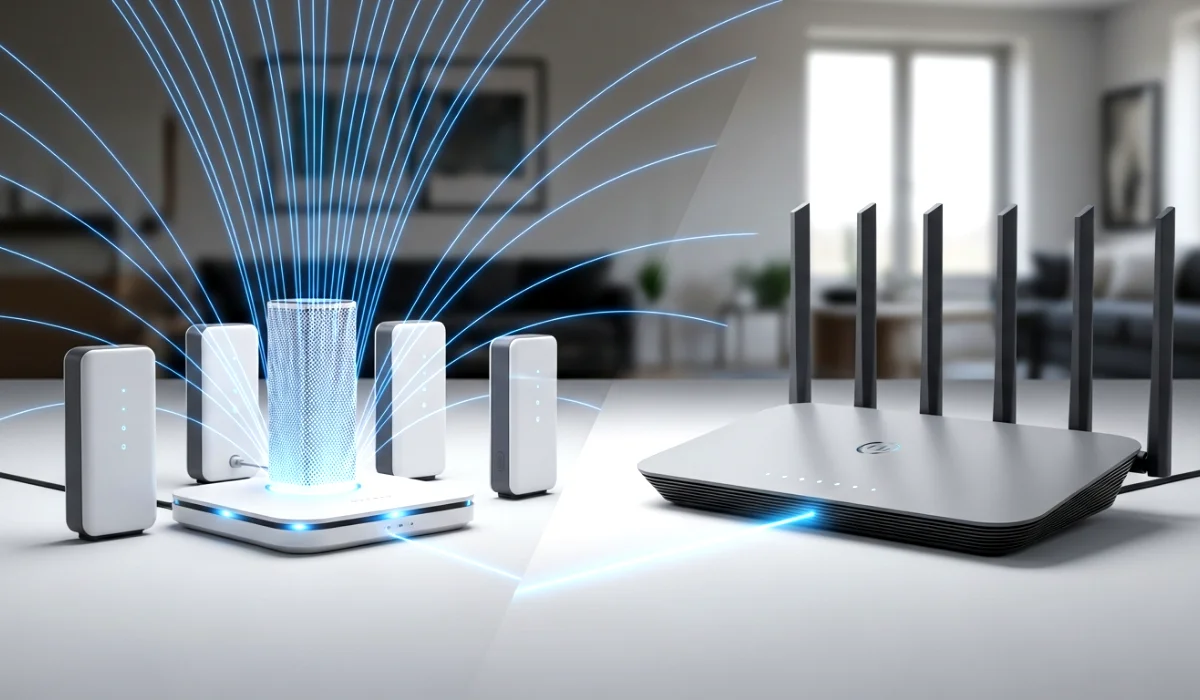
If you live in a flat, you have probably dealt with that annoying moment when your Wi Fi suddenly drops just when you are watching something, working, gaming, or video calling. I remember one day during an important online meeting, I walked just ten steps to pick up a notebook and boom the Wi Fi signals dipped as if they were shy of entering that corner of my flat. At that moment, I thought to myself, do I need a better router or is it time to switch to mesh Wi Fi
If you have ever asked the same question, you are in the right place. Today, we will look at mesh Wi Fi vs normal router and explore which one actually works better for flats. Apartments have their own challenges walls, corners, furniture, electrical boards and all these things affect how your signals travel. A setup that works perfectly in a big house may not work the same in a smaller flat.
So grab a cup of tea or coffee, and let us break this down in the simplest and most relatable way possible.
What Is A Normal Router
Before we compare anything, let us understand what a normal router actually does. A regular router sends Wi Fi signals from a single point. Imagine a small lamp in the center of a room. The light spreads in all directions, but the farther you walk, the dimmer it gets. Walls and furniture block it even more.
A normal router works in the exact same way. It gives you good signals near the device. But the lesser known truth is that most flats have several obstacles like brick walls, cupboard walls, thick doors, corners, sliding partitions, and appliances that steal signal strength.
This is the reason why one room gets full bars and another room barely gets any connection.
Now let us understand mesh Wi Fi so that the comparison becomes clearer.
What Is Mesh Wi Fi
Mesh Wi Fi is like having multiple lamps instead of one. Instead of sending signals from a single point, mesh Wi Fi uses small devices called nodes. Each node spreads Wi Fi signals in its area and they connect with each other to create a unified network. You can walk from one room to another without losing connection because the nodes communicate and hand over the connection smoothly.
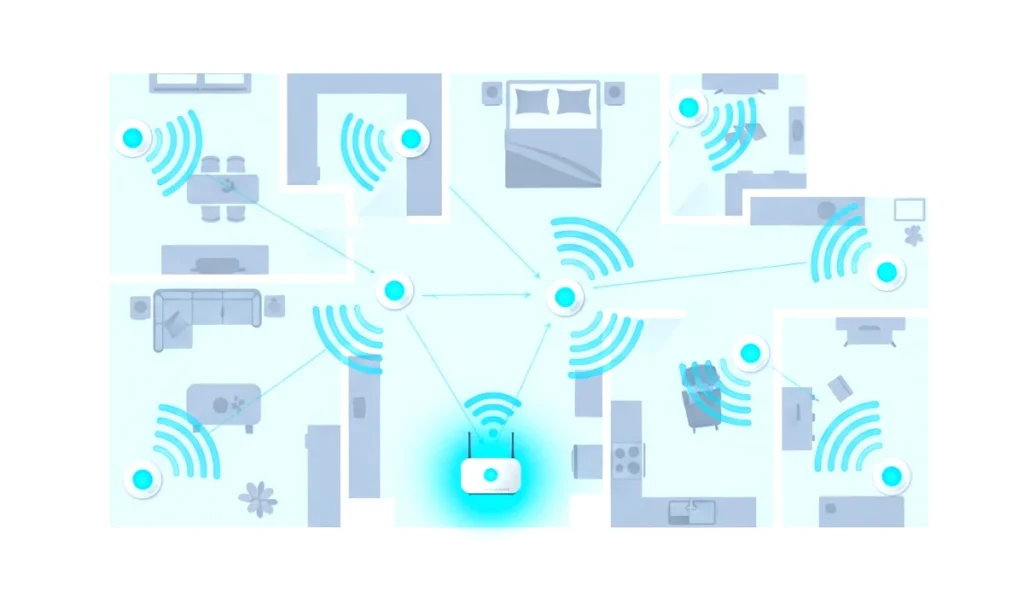
Now imagine this inside your flat. Living room has a node. Bedroom has another. Kitchen or study room may have a third one. Together they cover every corner with strong signals. It feels like Wi Fi follows you wherever you go inside your home.
Once I installed mesh Wi Fi in a friend’s apartment, he literally said it felt like he upgraded from a torchlight to full room lighting. That is how big of a difference it can make.
you can also read : LAN vs WAN vs VPN Explained For Beginners (Simple Guide With Real Life Examples)
Mesh Wi Fi vs Normal Router Which One Performs Better In Flats
Let us get into the real comparison. Flats have limited space, but they also have signal blocking walls. So which one works better Let us look at each factor one by one.
1. Coverage And Signal Strength
Normal Router
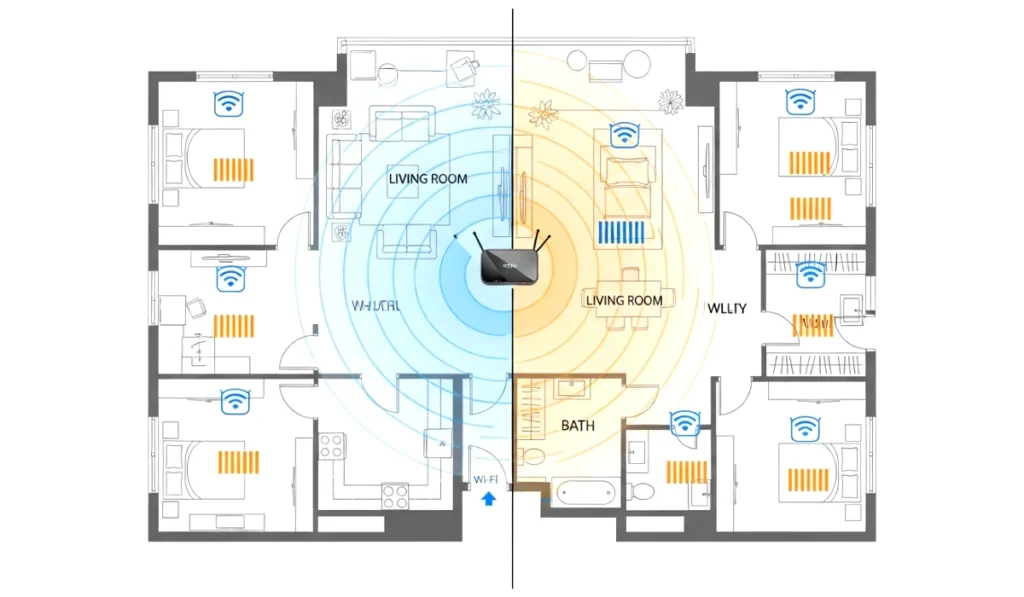
A normal router gives a strong signal only near the device. The farther you go, the weaker it becomes. In most flats, you will find blind spots near balconies, kitchens, and bedrooms.
Mesh Wi Fi
Mesh Wi Fi gives better coverage because nodes are placed in different rooms. Each node boosts the signal and makes sure no corner gets weak connection.
Winner for flats
Mesh Wi Fi
2. Stability And Reliability
Normal Router
If you move around the flat during a video call or online meeting, the signal may drop suddenly. Once you cross thick walls, the signals struggle.
Mesh Wi Fi
Mesh systems create one unified network. You can move around freely without worrying about losing connection. The nodes talk to each other and balance the load.
Winner
Mesh Wi Fi
3. Speed And Performance
Normal Router
Speeds are fast but only near the router. Once you go to other rooms, speed drops. For flats with thick walls, this drop can be extreme.
Mesh Wi Fi
Mesh nodes help maintain consistent speed across the flat. Even if you are in the last room, you get similar speed as the living room.
Winner
Mesh Wi Fi
4. Setup And Installation
Normal Router
Setting up a single router is easy. Plug it in, set a password, done. But if you add extenders later, things get messy because extenders create separate networks.
Mesh Wi Fi
Mesh Wi Fi setup is also simple. You just place the nodes and connect them through an app. The system automatically configures the network.
Winner
Tie both are easy, but mesh gives a cleaner setup
5. Price And Budget
Normal Router
Cheaper. You can get a decent router at an affordable price. But if you add extenders to improve coverage, your cost goes up.
Mesh Wi Fi
Mesh systems are more expensive, especially brand names like Google Nest, Netgear Orbi, TP Link Deco.
Winner
Normal router if budget is tight
Mesh Wi Fi if performance matters more
6. Best For What Type Of Flat
Small 1 BHK Or Very Small Studio Flat
A normal router is often enough, provided it is placed centrally.
Medium Size 2 BHK Or Larger Apartments
Mesh Wi Fi is better because signals need to travel through multiple walls.
Flats With Thick Walls Or Long Layouts
Mesh Wi Fi works best due to multiple nodes.
My Personal Experience With Both
I lived in a 2 bedroom flat for some years, and even after buying a powerful normal router, the bedroom farthest from the living room always suffered from weak Wi Fi. The router looked powerful on paper but real world usage is a different story.
Then I visited a friend who had installed mesh Wi Fi. He placed one node in the hall, one in the bedroom, and one near the corridor. I picked up my phone and walked around streaming a video without a single lag. That moment made me understand why mesh Wi Fi is becoming so popular.
After switching to mesh myself, I genuinely felt the difference every single day.
When Should You Choose A Normal Router
Choose a normal router if
- you live in a small or open layout flat
- you have fewer walls
- your usage is basic like browsing or streaming
- your budget is limited
- you can place the router in a central location
If these match your needs, a normal router will work fine.
When Should You Choose Mesh Wi Fi
Choose mesh Wi Fi if
- your flat has multiple rooms
- signals drop in some corners
- you have thick concrete or brick walls
- you work from home regularly
- you want seamless movement during calls
- you have smart home devices in different rooms
Mesh Wi Fi is ideal for flats where traditional routers fail to reach every area.
Is Mesh Wi Fi Worth It For Flats
Honestly, yes. For flats above a certain size or with heavy wall obstruction, mesh Wi Fi can feel life changing. No dead zones. No random disconnects. No suffering in the kitchen or bedroom.
It does cost more, but the experience is smoother and more stable.
Conclusion
When it comes to mesh Wi Fi vs normal router in flats, mesh Wi Fi clearly wins in terms of coverage, stability, and overall user experience. A normal router can still work for small flats, but once walls and distance come into play, mesh Wi Fi becomes the better choice.
Your Wi Fi plays a huge role in how you work, stream, study, and stay connected. So choose the option that gives you the best everyday experience.
If you are planning to upgrade, start by checking the layout of your flat. Then pick the system that matches your needs. And trust me, once you eliminate those annoying dead zones, you will wonder why you waited so long.






It’s crazy how just a few steps in the wrong direction can drop Wi-Fi signals, especially in smaller flats. I think the idea of mesh Wi-Fi systems really stands out in these spaces because it offers more consistent coverage throughout the apartment.