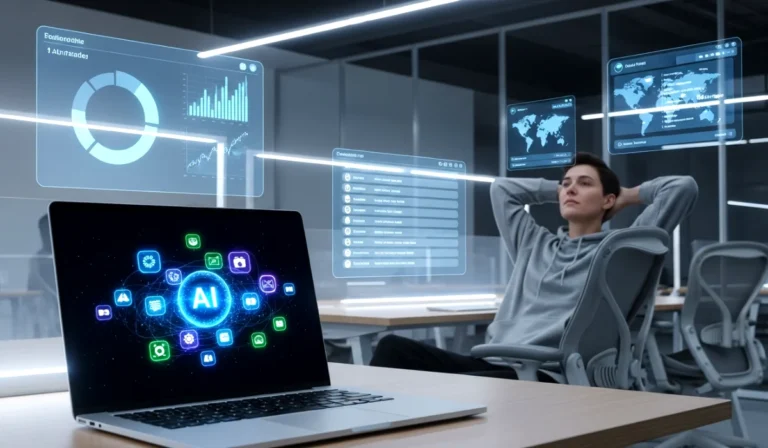
How AI will impact Indian schools and college education
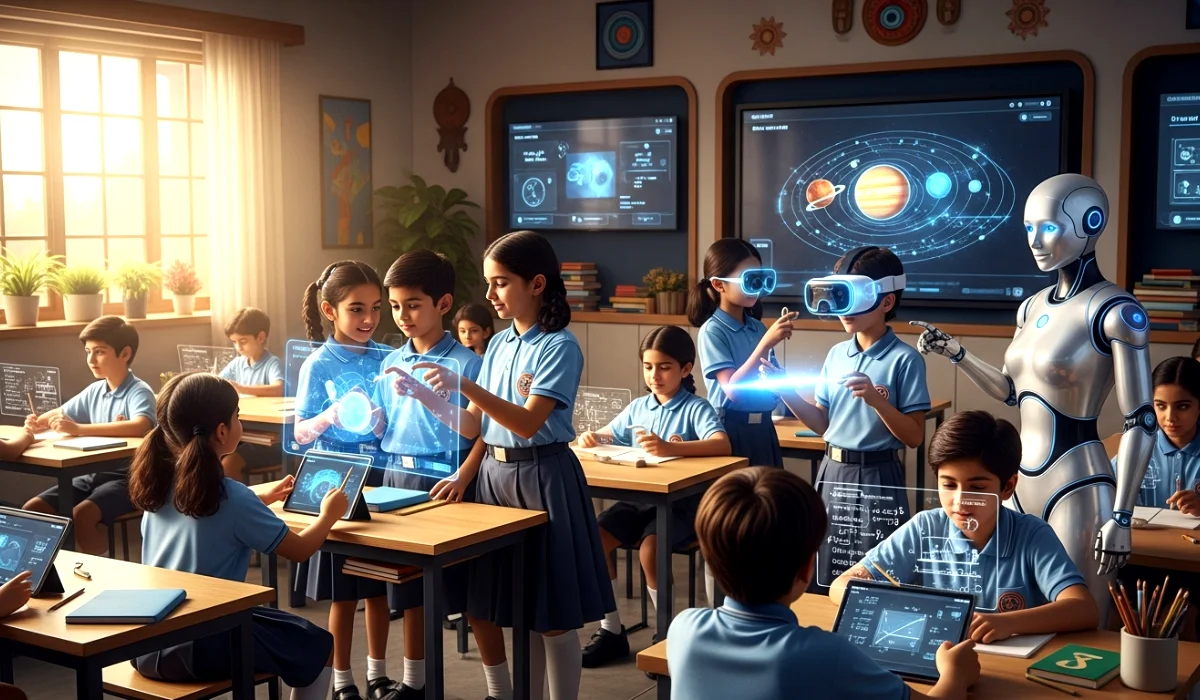
Have you ever sat in a classroom wondering why every student is taught in the exact same way even though no two minds think alike? I still remember how back in my school days, my maths teacher spoke so fast that I could barely keep up, while some of my friends sat bored because they already understood everything. It often felt like education was a train that moved at one fixed speed. If you fell behind, you stayed behind. And if you wanted more, well, tough luck.
Now something incredible is happening. Artificial Intelligence is stepping into Indian classrooms, not as a replacement for teachers but as a powerful companion that can change how students learn, how teachers teach, and how colleges prepare young people for real careers. The whole system is shifting, and honestly, it reminds me of the moment smartphones entered our lives. At first we joked about them, then slowly they became something we cannot imagine living without.
So let us explore how AI will impact Indian schools and college education in ways that feel exciting, scary, and full of possibility at the same time.
What makes AI a game changer for Indian education
Before we dive into tools and examples, let us understand why India needs AI in education right now.
India has one of the largest student populations in the world. Walk into any government school and you will see a classroom with sixty students and one tired teacher doing their best to manage all of them. Colleges face a different challenge. Thousands of students graduate every year, yet many struggle to find jobs because they do not have the right skills.
AI steps into both problems with unique solutions. It offers speed, scalability, and personalisation that no traditional method can match.
Here is why AI feels like a fresh breath of air for Indian education:
- It gives personalised feedback in real time
- It helps teachers reduce workload
- It brings world class learning to remote areas
- It prepares students for careers that did not exist ten years ago
- It enhances discipline and safety through smart attendance and monitoring systems
Imagine a world where no student feels lost and no teacher feels overworked. AI cannot magically fix every issue but it can definitely create a strong foundation for improvement.
How AI creates personalised learning paths
This is one of the biggest reasons experts say AI will impact Indian schools and college education in a transformational way.
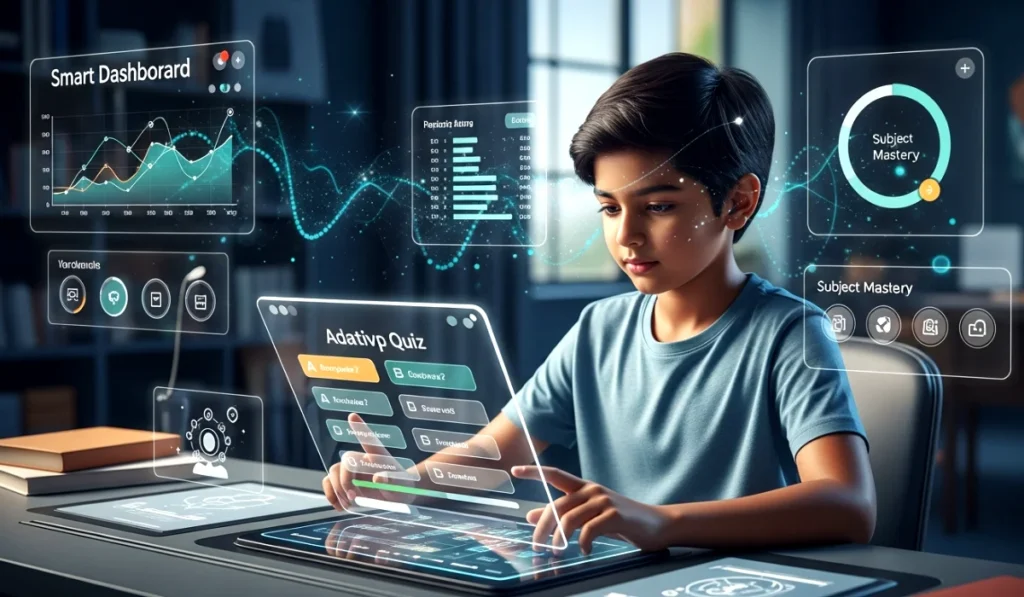
Think of it like this. When you open a fitness app, it does not give the same workout plan to everyone. It checks your age, your health, your goals. Then it guides you step by step. AI in education works in a similar way.
Examples of personalised AI powered learning
- A student weak in algebra will get easier problems and video explanations
- A fast learner will get advanced quizzes so they never feel bored
- A shy student who hates asking questions can chat with an AI tutor privately
- A dyslexic child can get customised reading material that truly supports them
If I had this when I was in school, I think half of my exam stress would have disappeared.
Now let us look at an imaginary scenario. Picture Riya, a class 9 student from a small town in Maharashtra. She dreams of becoming an engineer but struggles with physics concepts. Her school introduces an AI learning system that studies her mistakes and tailors lessons specially for her. After a month, her confidence improves and she begins scoring well. Her teacher also gets reports showing exactly where she is stuck.
This is not some future fantasy. Schools in India are already experimenting with such tools. Personalisation will no longer be a luxury but a basic expectation.
How AI helps teachers work smarter not harder
Teachers are the backbone of the Indian education system, yet we expect them to handle too many responsibilities. Teaching, checking homework, preparing question papers, attending meetings, training sessions, handling parents, and sometimes doing administrative tasks too.
AI can take a huge portion of repetitive work off their shoulders.
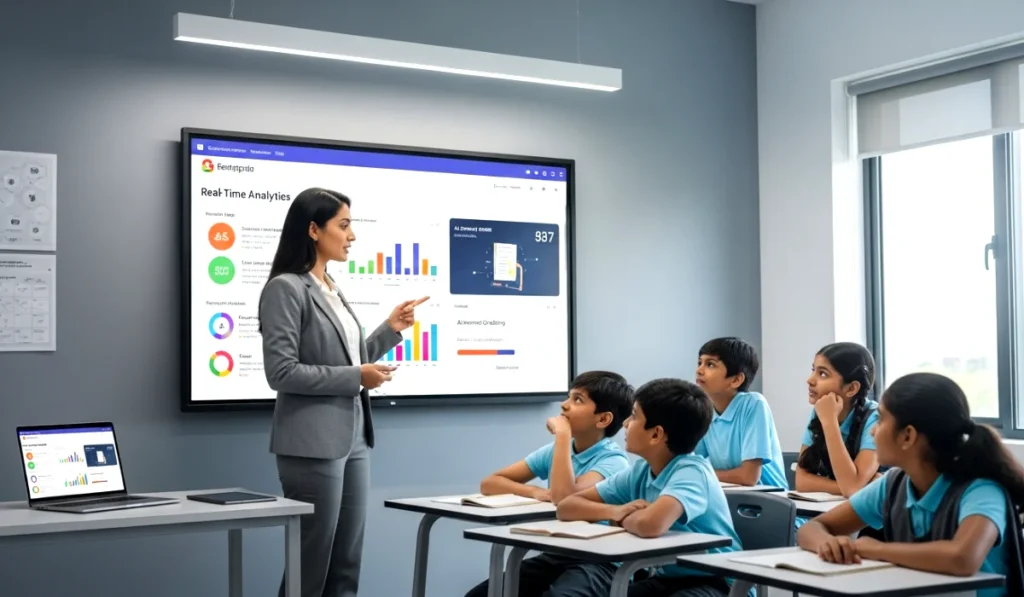
Ways AI supports teachers
- Automatic checking of objective assignments
- Instant creation of quizzes, worksheets, lesson plans
- Analytics showing which students are struggling
- Monitoring classroom attendance
- Generating notes and summaries from long chapters
This does not mean teachers become less important. In fact, they become more powerful. They get more time to guide, mentor, and motivate students. They can do the human tasks that machines cannot replace.
I know a teacher from Delhi who told me she spends nearly two hours every night checking notebooks. When she tried an AI based evaluation tool, her workload dropped dramatically. She said she finally had time to rest, to connect with her own children, and to plan creative lessons. For her, AI felt like a partner, not an enemy.
Why AI skills will shape future Indian careers
This is a major reason why AI will impact Indian schools and college education on a large scale.
Look at the job market today. Companies are seeking people who understand AI, machine learning, data analysis, cybersecurity, cloud computing, automation, and similar fields. Even non tech jobs now expect employees to handle digital tools comfortably.
If Indian schools and colleges do not teach these skills early, students will graduate unprepared.
AI related career skills students must learn
- Problem solving and critical thinking
- Data interpretation
- Basic coding and automation
- Ethical use of AI
- Research and digital literacy
Imagine colleges where students work on AI projects, build chatbots, analyse real world data, or create automated business ideas. This kind of learning not only makes them employable but also encourages entrepreneurship.
A report recently said India will need millions of AI skilled workers in the next few years. If our education system does not upgrade quickly, we risk falling behind other countries.
How Indian colleges will evolve with AI driven tools
Colleges are usually the first to adopt new technology, but Indian colleges need to move faster.
AI can reshape how admissions, lectures, labs, and placements work.
AI in college admissions
Predictive algorithms can study student applications and help colleges identify talent. They can also assist students in choosing the right course based on their interests and strengths.
AI in teaching and learning
College lectures can become more interactive with tools that create simulations. For engineering students, AI can generate virtual labs. For medical students, AI can help practise diagnosis on simulated patients.
Imagine studying history and having an AI generate a lifelike visual of an ancient civilisation. It feels like stepping directly into the past.
AI in campus management
- Smart attendance tracking
- Security systems
- Data based decision making
- Automated scheduling and result processing
AI in placements
Employers can match skill sets with job openings better. Students can practise interviews with AI powered mock systems that give feedback on tone, confidence, and clarity.
Colleges will no longer be just physical campuses. They will become AI assisted learning ecosystems.
Challenges Indian education must solve before using AI
Everything sounds exciting, but let us be honest. There are challenges too. India is a diverse country with varying levels of access, affordability, and awareness.
Here are the main obstacles:
1. Digital divide
Not every student has a smartphone or stable internet. Schools in rural areas still struggle with basic infrastructure. AI adoption must be inclusive or it will widen the gap instead of reducing it.
2. Teacher training
Some teachers fear technology because they have never used it. Training programs must be simple, practical, and supportive.
3. Data privacy
Schools and colleges must protect student data carefully. AI tools should be safe, transparent, and trustworthy.
4. Cost of implementation
AI solutions can be expensive initially. Government support and public private partnerships will be essential.
5. Avoiding over dependence
AI should support learning, not replace real human curiosity. Students must still learn to think independently.
Despite these challenges, the future still looks promising. India has the potential, talent, and energy to make AI powered education a success story.
Final thoughts on the future of AI in Indian schools and colleges
If you ask me whether AI will impact Indian schools and college education in a positive way, my answer is a strong yes. Not because AI is flawless, but because it gives us a chance to rebuild education into something more human, not less.
AI will make learning personalised.
AI will reduce the burden on teachers.
AI will prepare students for future careers.
AI will open doors for innovation and creativity.
But ultimately, the heart of the classroom will always be the connection between a teacher and a student. AI is just the tool that strengthens that relationship.
The world is moving fast, and India has a golden opportunity to shape education for the next generation. Whether you are a parent, a student, a teacher, or simply someone who cares about the future, now is the perfect time to understand how AI is changing everything.
If you enjoyed this post and want more real insights on education, tech, and future skills, feel free to drop a comment or share your thoughts. And if you are ready to explore AI tools for your own learning, why not start today?
Your future might just thank you.