What Is the Metaverse and Why It Matters More Than You Think

Have you ever put on headphones, opened a game, and completely forgot where you were sitting? For a few moments, your room disappeared and you were somewhere else. That feeling right there is the closest simple example of what the metaverse is trying to achieve.
I still remember the first time I watched a virtual concert inside a game. Thousands of people, avatars dancing, music blasting, and not a single real stage in sight. I thought, this is cool but also a little strange. Fast forward to today, and suddenly everyone from tech giants to small creators is talking about the metaverse like it is the next big thing.
So what is the metaverse exactly, and why does it matter so much right now? Let us break it down slowly, clearly, and honestly.
🌐 What Is the Metaverse
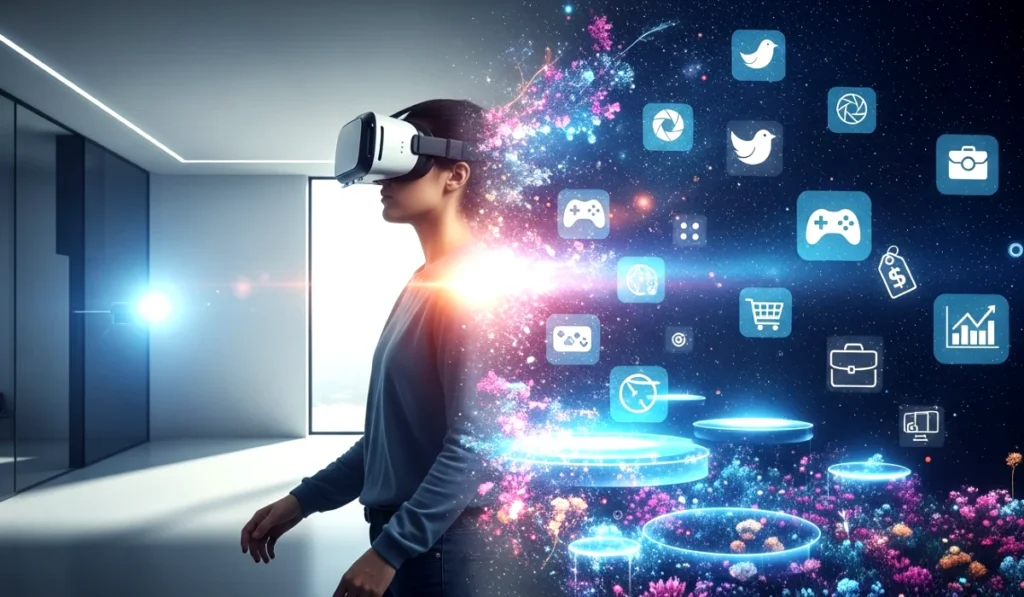
The metaverse is a shared digital world where people can interact with each other and with virtual environments in real time. Think of it as an evolved version of the internet, not just something you look at on a screen, but something you step into.
When people ask what is the metaverse, I usually explain it like this. Imagine social media, online games, virtual meetings, shopping apps, and digital payments all blended into one immersive experience. Instead of scrolling, you are present. Instead of clicking, you are moving.
The metaverse is not one single app or website. It is a network of connected virtual spaces powered by technologies like virtual reality, augmented reality, blockchain, and artificial intelligence.
Some key characteristics of the metaverse include:
• Persistent virtual worlds that continue even when you log out
• Digital avatars that represent you
• Real time interaction with others
• Virtual ownership of assets like land, clothes, or art
• A feeling of presence rather than just viewing
This is why the main keyword what is the metaverse keeps showing up everywhere. People sense something big is forming, but they want clarity.
⚙️ How the Metaverse Works
To understand how the metaverse works, let us look behind the curtain.
At its core, the metaverse runs on a combination of technologies working together. No single invention created it. Instead, it is the result of years of progress finally lining up.
First, there is virtual reality and augmented reality. VR puts you inside a digital world using headsets. AR adds digital elements on top of the real world using phones or smart glasses.
Second, high speed internet and cloud computing make real time interaction possible. Without fast connections, shared virtual spaces would lag and break immersion.
Third, blockchain technology allows digital ownership. This is how virtual land, items, and identities can belong to users rather than platforms.
Fourth, AI systems make worlds feel alive. Non player characters react, environments adapt, and experiences feel more human.
When all these pieces come together, the metaverse starts to feel less like a game and more like an alternate digital reality.
🎮 Real Life Examples of the Metaverse
One mistake people make is thinking the metaverse is only a future idea. In reality, it already exists in fragments.
Online games like Fortnite and Roblox are early metaverse examples. Players socialize, attend events, build worlds, and even earn money. These are not just games anymore. They are digital hangout spaces.
Virtual offices are another example. Companies now hold meetings in 3D environments where avatars sit around a table, gesture, and collaborate. It sounds odd until you try it and realize it feels more natural than staring at a grid of video calls.
Then there are virtual marketplaces. People buy digital clothes for avatars, virtual real estate, and art that exists only online. At first, I laughed at the idea of paying real money for virtual sneakers. Then I remembered we already buy skins in games and filters on apps. Same behavior, new scale.
These examples show that what is the metaverse is not a single product launch. It is an evolution happening quietly around us.
💡 Why the Metaverse Matters Today
So why does the metaverse matter right now and not ten years later?
Because our lives are already deeply digital. Work, learning, shopping, entertainment, and friendships all exist online. The metaverse simply makes these experiences more immersive and human.
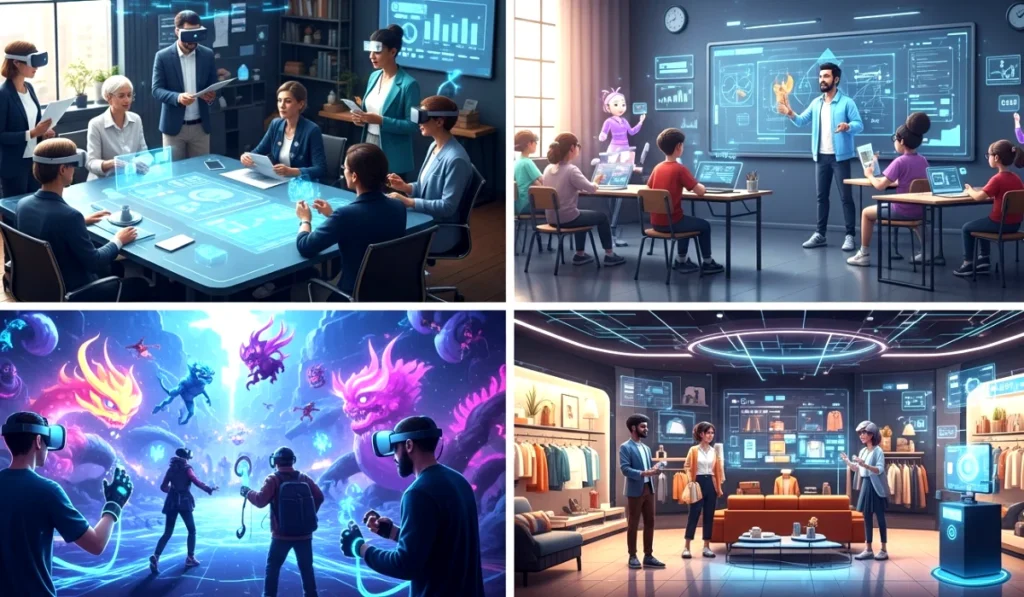
For businesses, the metaverse opens new ways to reach customers. Instead of ads, brands can create experiences. Imagine walking into a virtual store, trying products, and chatting with a real human avatar.
For education, virtual classrooms can simulate labs, history, or medical training without physical limits. Learning becomes experiential rather than passive.
For individuals, the metaverse offers new career paths. Designers, developers, community managers, digital architects, and virtual event hosts are already in demand.
This is why understanding what is the metaverse is becoming essential, not optional.
🏠 Metaverse Use Cases in Daily Life
The metaverse is not only about entertainment. Its use cases are spreading into daily routines.
In remote work, virtual offices reduce isolation and improve collaboration. You feel present, not just connected.
In healthcare, doctors practice surgeries in virtual simulations. Patients attend therapy sessions in calming digital environments.
In fitness, people exercise together in shared virtual spaces, making workouts social again.
In real estate, buyers tour properties virtually before visiting in person.
In social life, friends meet, attend concerts, or travel digitally when physical distance gets in the way.
Each of these examples shows how the metaverse blends convenience with connection.
✅ Benefits of the Metaverse
Let us talk benefits honestly, without hype.
One major benefit is accessibility. People who cannot travel or attend physical events can still participate fully.
Another is creativity. Anyone can build worlds, experiences, and businesses with fewer barriers than the real world.
There is also economic opportunity. Digital goods, services, and skills create new income streams.
The metaverse also improves engagement. Humans are wired for presence. Immersive environments feel more natural than flat screens.
When people ask me if the metaverse is worth learning about, I always say yes, even if it evolves differently than expected.
⚠️ Risks and Challenges of the Metaverse
Now, let us be real. The metaverse is not perfect.
Privacy is a big concern. When environments track movement, behavior, and reactions, data collection becomes intense.
There is also the risk of addiction and escapism. Spending too much time in virtual worlds can blur boundaries.
Digital inequality is another issue. Not everyone can afford devices or fast internet.
Then there are regulation and safety challenges. Harassment, fraud, and misinformation can follow users into immersive spaces.
Understanding these risks is part of responsible adoption. EEAT means expertise and trust, not blind optimism.
🔮 Is the Metaverse the Future of the Internet
Is the metaverse the future of the internet? My honest answer is this. Parts of it definitely are.
The internet started as text, then images, then video, then social interaction. Immersion feels like the next logical step.
However, not everything will move into 3D worlds. Traditional websites and apps will still exist. The metaverse will complement them, not replace them overnight.
Think of it like smartphones. They did not kill laptops, but they changed how we live online.
🧭 How to Prepare for the Metaverse
You do not need to buy expensive headsets tomorrow. Preparation starts with mindset.
First, learn the basics. Understand what is the metaverse, how it works, and where it is used.
Second, build digital skills. Design, coding, 3D modeling, writing, community management all matter.
Third, experiment slowly. Try platforms, attend virtual events, explore without pressure.
Finally, stay critical. Ask questions. Protect privacy. Balance virtual and real life.
That balance will matter more than technology itself.
🧠 Final Thoughts on the Metaverse
The metaverse is not magic, and it is not a myth. It is a developing layer of the digital world shaped by human behavior.
Some parts will succeed, others will fail. That is normal. What matters is understanding the direction things are moving.
If you understand what is the metaverse today, you will not be confused tomorrow when it quietly becomes part of everyday life.
Start small. Stay curious. And most importantly, stay human in digital spaces.