
How Green Software Engineering: What Developers Can Do Differently in 2026
Have you ever stopped midway through a coding session and wondered how much energy your software actually consumes? I remember the first time I looked at a dashboard that showed the carbon impact of a feature I had just deployed. My jaw literally dropped. I always thought sustainability belonged to the world of electric cars and recycling containers, not to the apps sitting quietly on my servers. But the deeper I went, the more I realised something important. Developers have more influence on digital sustainability than we ever imagined.
Welcome to a future where green software engineering is no longer optional. In 2026, it is quickly becoming a core responsibility for any developer or tech team that cares about performance, cost efficiency, brand value, and of course, the planet. And honestly, the changes are not as complicated as you might think.
Now get your coffee, settle in, and let’s dig into what developers can truly do differently in 2026 to make their software cleaner, faster, leaner, and kinder to the environment.
What Is Green Software Engineering And Why Is 2026 The Turning Point
Before we talk about changes, let’s get on the same page. Green software engineering simply means building and running software in a way that reduces negative environmental impact. It focuses on cutting unnecessary energy use, lowering carbon emissions, and making digital systems operate as efficiently as possible.
Now here is the interesting part. By 2026, the world is finally waking up to the real scale of digital pollution. Data centers are expanding at a speed that feels unreal, AI computing is growing insanely fast, and billions of small everyday apps silently munch through electricity. More companies are facing pressure from customers and governments to prove that their tech infrastructure is sustainable.
So 2026 becomes a turning point. Developers are no longer just writers of logic and features. They are architects of digital sustainability. They have the power to reshape how technology consumes energy and how responsibly it behaves.
And you, my friend, are part of that shift.
You can also read this : Ethical AI in 2026: Bias, Regulation and Transparency Trends to Watch
The Hidden Energy Behind Everyday Code
People often assume the cloud is some magical space that runs on unlimited power. But every digital action has a cost.
When you:
• Run a huge query
• Use unnecessary loops
• Store gigabytes of unused logs
• Call APIs ten times more than needed
• Keep servers running at high capacity
You are not just wasting company money. You are wasting energy that came from a physical power plant somewhere.
I still remember one project where we discovered a tiny background job running every three minutes. It seemed harmless. But after measuring, we realised it was generating millions of requests per day across all clients. No one noticed because it never broke anything. But when we fixed it, the energy consumption of the whole service dropped by nearly half. Sometimes the smallest inefficiencies hide the biggest energy leaks.
This is exactly why green software engineering matters.
1. Write Efficient Code That Does More With Less
Let’s start with the obvious. Code efficiency is not about writing clever one liners that confuse the next developer. It is about writing code that achieves the same task with fewer operations, fewer resources, and less time.
In 2026, efficient code becomes a form of digital craftsmanship.
Here are changes developers can make:
Keep complexity low
Avoid unnecessary processing. Replace nested loops with better data structures. Use algorithms that scale well.
Limit resource heavy tasks
Compression, encryption, video processing, and data transformation can eat energy like candy. Try to optimise them or offload them intelligently.
Reduce unnecessary data movement
The less your code moves data around, the less energy it uses. Caching, batching, and local processing help massively.
Use asynchronous methods
Waiting for blocking code wastes time and energy. Asynchronous workflows make everything smoother and lighter.
One of my friends once told me, “I finally realised my code was like a hungry kid. If I feed it garbage, it consumes double the energy.” And honestly, he was right.
Efficient code is green code.
2. Optimise Data Usage Before It Turns Into Digital Waste
Data is the new oil, sure. But just like oil, too much of it turns messy quickly. One of the biggest drains on energy today is the storage and transfer of unnecessary data.
Developers in 2026 can take smart steps like:
Avoid storing what you will never use
Delete unused logs, old backups, redundant reports, abandoned user files, or temporary builds.
Compress data properly
Modern compression techniques can reduce storage footprint by huge margins.
Use pagination and selective queries
Pulling the entire database table to get five values is pure energy waste.
Clean databases regularly
Imagine a fridge full of expired food. That is exactly how messy old databases look from the inside.
During one of my freelance projects, the team thought they had a storage issue. Turns out 80 percent of their cloud bill came from logs that no one had checked for two years. Once cleaned, their energy consumption and costs dropped instantly. That is the beauty of green software engineering.
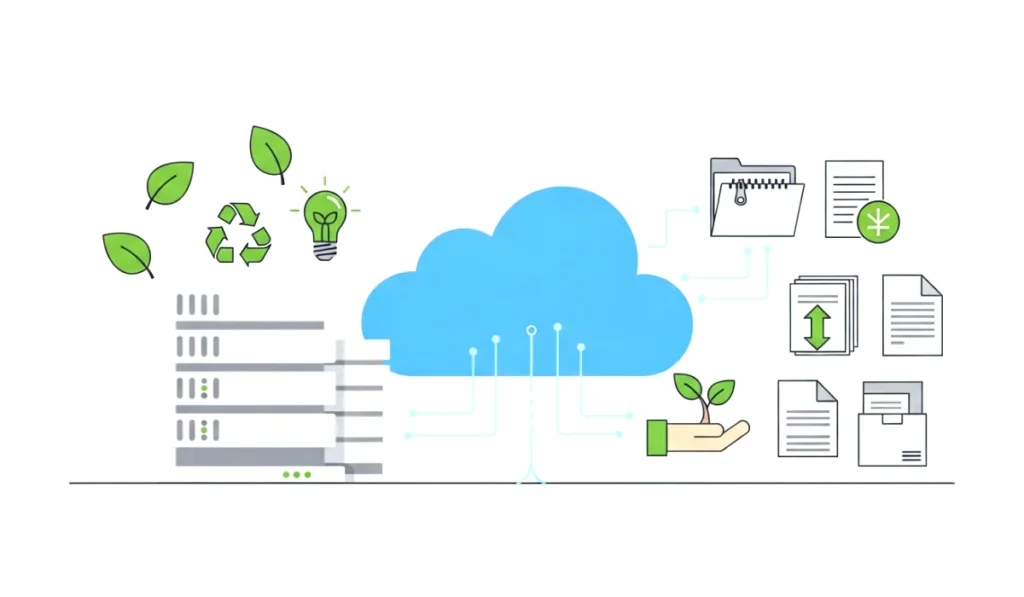
3. Make Cloud Resources Smarter Instead Of Bigger
In 2026, cloud service providers keep adding more powerful machines, bigger GPU clusters, and new storage options. But bigger does not always mean better. Most software today wastes a shocking amount of cloud resources.
Developers can fix this easily by:
Choosing the right instance size
Not every task needs a high performance machine.
Auto scaling
Let servers grow or shrink automatically instead of running max capacity all day.
Using serverless functions
They run only when needed which saves a lot of energy.
Avoiding idle resources
Unused VMs, containers, or databases still eat energy behind the scenes.
Running workloads in low carbon regions
Some geographic locations use renewable energy more than others.
I once moved a batch system from a fixed compute instance to a serverless model. It felt risky at first, but the drop in energy consumption and cost was unbelievable. Sometimes the greener path is also the smarter financial path.
4. Improve Frontend And Mobile Performance To Cut Digital Load
Green software engineering is not only a backend story. Frontend and mobile developers have huge influence as well.
Heavy pages load slower, drain battery faster, consume more bandwidth, and force servers to work harder.
Here are ways developers can make frontends cleaner:
Compress images properly
One oversized banner can waste massive energy across millions of views.
Use lazy loading
Load resources only when needed instead of loading the whole universe at once.
Minify CSS and JS
It improves performance and reduces energy consumption during transfers.
Reduce excessive animations
Smooth experiences are good. But unnecessary animations waste GPU cycles and battery.
Build lighter mobile apps
Lower background tasks
Less data sync
Optimised media
Users love faster apps. Devices love lower battery drain. And the planet loves reduced energy use.
5. Shift From Quantity To Quality In AI Usage
AI usage is growing like crazy. But AI is also one of the most energy hungry technologies ever created. That is why green software engineering in 2026 puts huge emphasis on responsible AI.
Developers can reduce AI energy consumption by:
Using smaller models when possible
Not every task needs a massive model.
Reusing or fine tuning models
This avoids training from scratch which burns huge power.
Avoiding unnecessary AI calls
Use rule based systems where simple logic works.
Caching AI responses
No need to regenerate the same output repeatedly.
Training at low carbon times or regions
Green energy windows are becoming widely available.
I once worked with a team that called an AI model on every single keystroke inside an app. No wonder their cloud bill exploded. When they switched to checking input only every few seconds, everything became smoother, cheaper, and greener.
6. Build Energy Aware Testing And CI-CD Pipelines
Testing and continuous integration often run silently in the background. But these systems can consume more energy than production if not controlled.
Developers in 2026 can optimise pipelines by:
Reducing unnecessary test runs
Trigger tests only for relevant changes.
Using lightweight test containers
Keep environments small and fast.
Parallel testing with resource caps
Speed and efficiency together is possible.
Clearing cached builds
Old build artifacts can pile up like digital dust.
Avoiding constant rebuilds
Use incremental builds instead.
You would be surprised how much energy gets wasted only because pipelines run on autopilot without checking if tasks are still necessary.
7. Encourage A Culture Of Green Thinking Inside Tech Teams
The truth is one developer cannot fix everything alone. But one developer can start the conversation. Green software engineering becomes powerful when your whole team cares about it.
Here is how to encourage it:
• Add energy efficiency checks during code review
• Share dashboards showing carbon impact
• Teach new developers about sustainable coding
• Reward teams for reducing unnecessary computing
• Use tools that measure software energy consumption
I once joined a company where developers proudly showed charts proving how they reduced carbon emissions through smarter coding. That culture was contagious. In a year, the entire engineering department had transformed into a team that truly cared about the digital impact they were making.
8. Make Performance And Sustainability Walk Hand In Hand
Some people think sustainability means sacrificing performance. But that is far from true. In fact, green software engineering often boosts performance because it removes waste, reduces latency, and improves system structure.
The same optimisations that save energy also make your app faster for users.
So in 2026:
• Fast apps
• Efficient apps
• Lightweight apps
• Clean apps
These are the apps that win user trust and search engine love.
Conclusion: Why Developers Should Embrace Green Software Engineering In 2026
Green software engineering is not a trend. It is the future of responsible tech. When developers start writing cleaner code, optimising data, using smart cloud choices, improving frontend performance, managing AI responsibly, and building energy aware systems, the whole digital world becomes healthier.
Think about it. You can write one small fix today that saves energy for millions of users tomorrow. You can design a system that runs cleaner and faster than anything you built before. And you can be one of the developers shaping a sustainable digital world instead of adding to its hidden pollution.
So here is my call to action. Pick one point from this article and apply it to your current project. Just one. You will be surprised how quickly the ripple spreads.
Your code can change more than screens. It can change the world.


One Comment