Web3 Domains and Decentralized Websites Explained
Have you ever sat back, scrolling through the internet, and thought, “Why do we still rely on the same old systems for websites and domains?” I had one of those moments while helping a friend set up his first online store. We spent hours dealing with hosting settings, domain renewals, DNS records, and that constant worry lingering in the background: What if the site goes down? What if the domain gets suspended? What if the company holding everything just decides something else one day?
That tiny thought led me into the world of Web3 domains and decentralized websites, and honestly, it felt like discovering a hidden side of the internet. A side where you actually own your online identity. A side where websites do not depend on one company or server. A side that runs 24/7 because it sits on blockchain technology and not on a traditional server that can crash anytime.
Now let us take a deeper look and make sense of all this in a simple, friendly way. Grab a coffee, and let us explore what Web3 domains really are, how decentralized websites work, and why they are becoming the future of the online world.
What Are Web3 Domains?
Imagine buying a traditional domain like mysite.com. You pay yearly fees, follow strict rules, and if the domain registrar or government wants, they can suspend or control it. Even though you paid money for it, you never fully own it.
Now picture owning a Web3 domain. You buy it once and it is yours forever. No renewals. No company in the middle. No restrictions. You store it in your crypto wallet just like you store tokens.
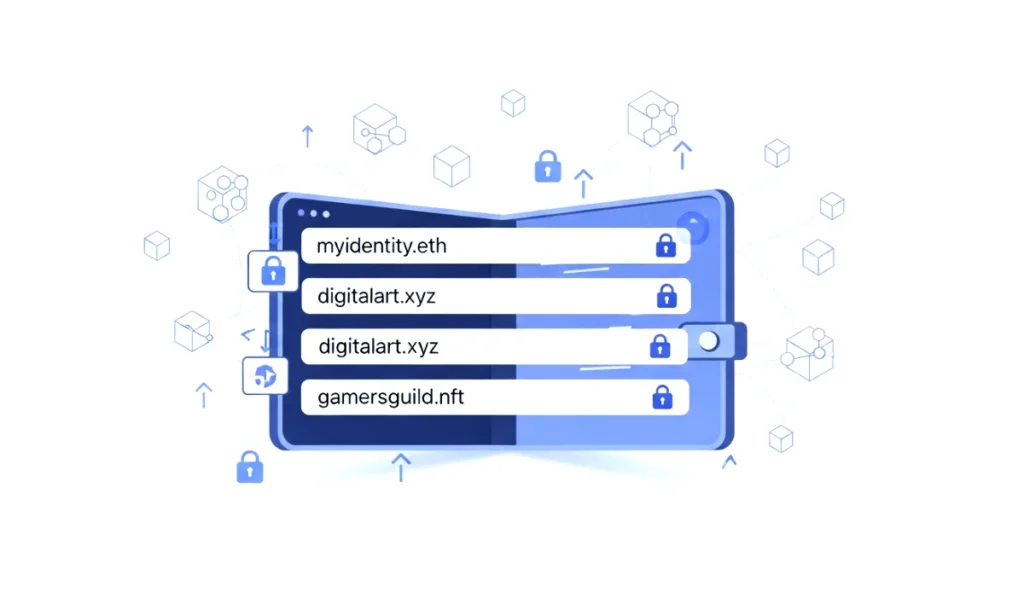
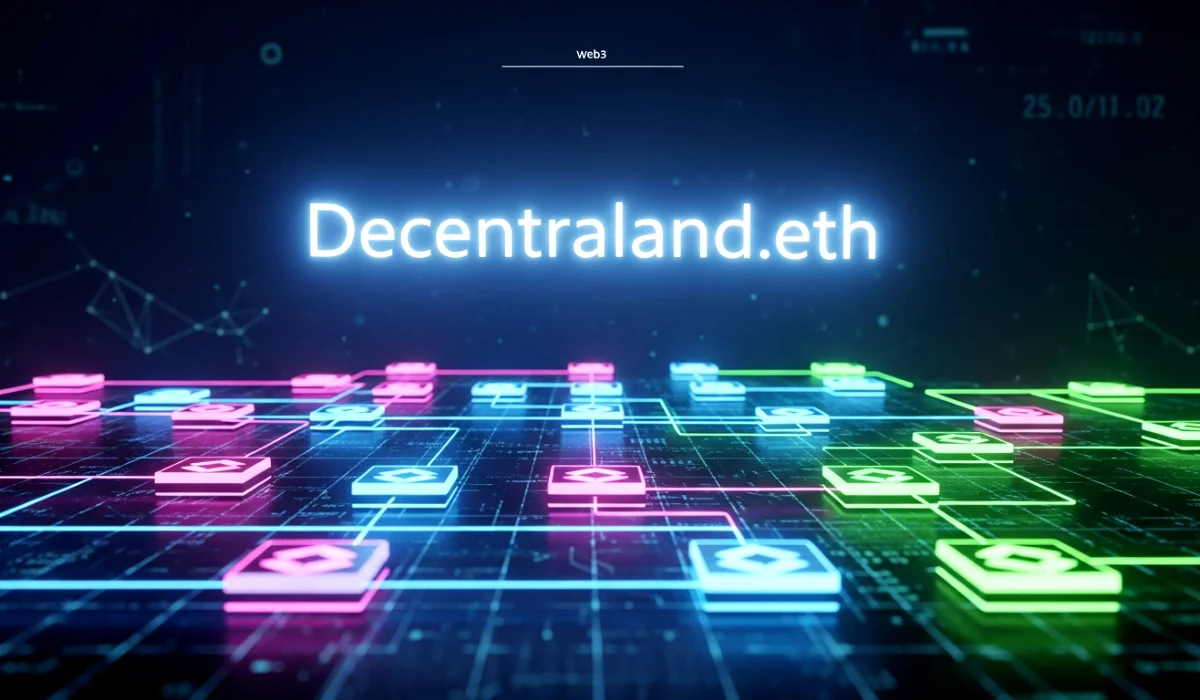
A Web3 domain is a blockchain based domain. It lives entirely on a decentralized network like Ethereum, Polygon, or Solana. These domains work as:
- A website address
- A universal username for the Web3 world
- A crypto wallet address
- A digital identity you fully control
When I bought my first Web3 domain, it felt strange knowing that no corporation could take it away from me. It was like holding a digital passport that belonged to me and only me.
This concept alone has attracted millions of people to the Web3 movement. After all, ownership is powerful.
Why Web3 Domains Matter
Let us be honest. The internet we use today looks open but is tightly controlled. Traditional domains rely on centralized systems like ICANN. Hosting relies on servers owned by big companies. If anything breaks, millions of websites go offline.
Web3 domains change the entire model. They bring:
Full Ownership
When you buy a Web3 domain, you own it permanently. No renewal fees. No fear of losing it.
Censorship Resistance
No one can block or shut down your domain. It exists on the blockchain which cannot be controlled by a single authority.
Security
Blockchain is known for its strong security. Web3 domains inherit that safety. They cannot be easily hacked or stolen unless someone gets your private keys.
Digital Identity
Your Web3 domain can become your universal identity. Imagine logging in everywhere with one single name connected to your wallet.
These benefits make Web3 domains more than just an address. They are a statement of digital freedom.
How Do Decentralized Websites Work
Traditional websites live on central servers. If that server goes down, your website goes down. If the hosting provider bans you, everything disappears.
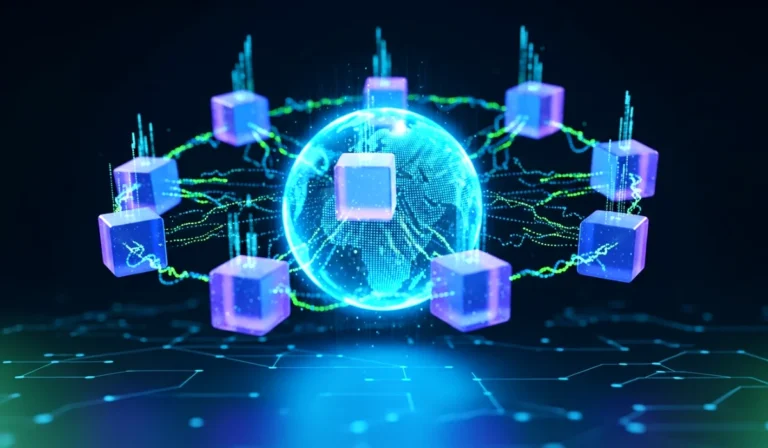
Decentralized websites do not rely on one server. They sit on distributed networks like IPFS (InterPlanetary File System). Sounds complicated but the idea is simple.
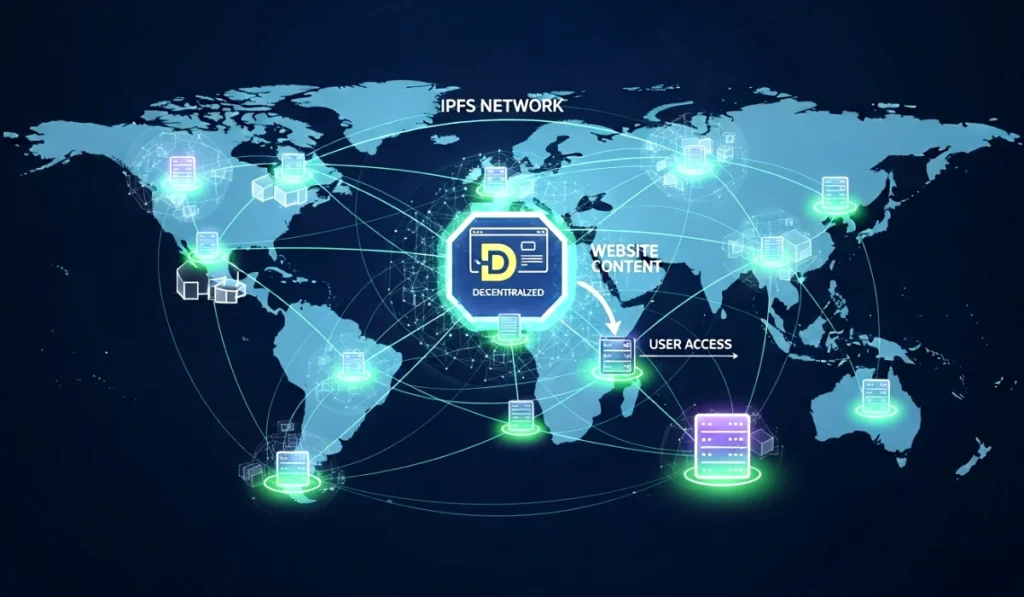
Content is stored across multiple nodes
Instead of one computer, your website files get stored in small pieces across many computers worldwide.
No single point of failure
Even if one or two nodes go offline, your website stays alive.
Connected to a Web3 domain
Your Web3 domain points directly to your IPFS hosted site.
This is important because it means your website can survive outages, restrictions, and attacks. It becomes as strong as the network behind it.
To me, setting up an IPFS hosted site felt crazy at first. It was weird knowing that my files were not sitting in one single place but spread out all over the world. But after watching the site load smoothly without any central hosting plan, that feeling turned into excitement for what the future could look like.
The Real Magic Behind the Web3 Revolution
So why are people jumping into Web3 domains and decentralized websites? Let me break down some practical examples.
Example 1: A Creator Who Never Wants to Lose Their Website
Imagine you are a content creator and your website gets suspended because of a policy you never heard of. With a Web3 domain and decentralized hosting, nobody can pull the plug on your platform.
Example 2: A Business That Wants Guaranteed Uptime
Decentralized websites remove traditional downtime issues. Perfect for online stores that cannot afford to lose even a minute.
Example 3: A Person Who Wants a Single Digital Identity
A Web3 domain works everywhere in the decentralized world. You can use it for receiving crypto, logging into apps, and managing your online presence.
These real world use cases show why more people, businesses, and developers are shifting toward Web3 solutions.
Are Web3 Domains Better Than Traditional Domains
Let us keep it real. Nothing is perfect, and Web3 domains also have limitations. To make a fair comparison, let us look at both sides.
Advantages of Web3 Domains
- One time payment
- Ownership is permanent
- Censorship resistant
- Works as a crypto wallet
- Future proof identity
- Stronger security
Limitations of Web3 Domains
- Not all browsers support them natively
- Requires basic blockchain knowledge
- Hosting decentralized websites can be slow if not configured properly
- Regulations in some countries may evolve
Even with these challenges, the momentum behind Web3 is strong. Every year, more browsers, companies, and platforms start supporting them.
Will Web3 Domains Replace Traditional Domains
This is a question I get a lot, and honestly, the answer is not simple.
Traditional domains will not disappear anytime soon. Big companies rely on them. Governments recognize them. Entire systems are built around them.
But Web3 domains will grow faster. They bring ownership and freedom that traditional systems cannot match. In the future, both systems may exist side by side. One for regular websites, one for decentralized ecosystems.
Think of it like emails and messaging apps. Emails did not vanish when WhatsApp arrived. They simply serve different needs.
How to Buy a Web3 Domain Easily
Even though it sounds technical, buying a Web3 domain is very simple.
Basic Steps
- Create a crypto wallet
- Visit a Web3 domain provider
- Search for your desired name
- Pay one time fee
- Store the domain in your wallet
Within minutes, the domain becomes your property forever.
How Decentralized Websites Will Change the Internet
When I first learned about decentralized websites, it hit me that the internet might change forever. Imagine a world where:
- No site can be taken down unfairly
- No domain renewal stress
- Every user fully owns their identity
- Websites live on unstoppable networks
That is the vision of Web3.
And the crazy part is that it is already happening. Slowly, quietly, but steadily.
A Personal Reflection on the Future
Sometimes I think about how the internet looked 10 years ago. We thought we had reached the peak of technology. But here we are again, entering another revolution. A more private, more secure, and more user owned internet.
To me, Web3 domains feel like the beginning of that shift. A small piece of the puzzle that might change the entire picture.
And if you are someone who loves being early to new trends, learning Web3 domains now might be the smartest move you make.
Conclusion: Why Web3 Domains Are Worth Understanding Today
Web3 domains are not just a trend. They are part of a bigger movement toward decentralization, ownership, and digital freedom. As more people discover how these domains work and how decentralized websites stay online without central servers, the entire internet will slowly evolve.
If you ever dreamed of owning your online identity fully, this is your moment to step in and explore. Start small, read more, try a simple decentralized website, and see how it feels. The future is already opening its doors.
Your next big digital identity might just begin with a Web3 domain.
FAQ Section
1. What is a Web3 domain in simple words
A Web3 domain is a blockchain based domain name that you fully own once you buy it. Unlike traditional domains that need yearly renewals, a Web3 domain stays in your crypto wallet permanently and works as your online identity in the decentralized world.
2. Can Web3 domains be used for normal websites
Yes, but not directly in every browser yet. Some browsers support Web3 domains natively, while others require small extensions. You can also connect a Web3 domain to a decentralized website hosted on IPFS for a complete Web3 experience.
3. Are Web3 domains safe to use
Web3 domains are extremely secure because they are stored on blockchain networks that cannot be easily hacked or controlled by a single authority. Your domain stays safe as long as your crypto wallet and private keys are secure.
4. What is the difference between Web3 domains and traditional domains
Traditional domains need yearly renewals and can be removed or restricted by companies or governments. Web3 domains are one time purchases stored on blockchain with full ownership, no renewals, and added features like wallet addresses and digital identity.
5. Can I build a decentralized website without coding
Yes, many platforms now let you create simple decentralized websites without coding. You can upload files to IPFS, connect them to your Web3 domain, and your site becomes live on a distributed network without needing traditional hosting.