
What Is Quantum Computing Explained Simply For Beginners
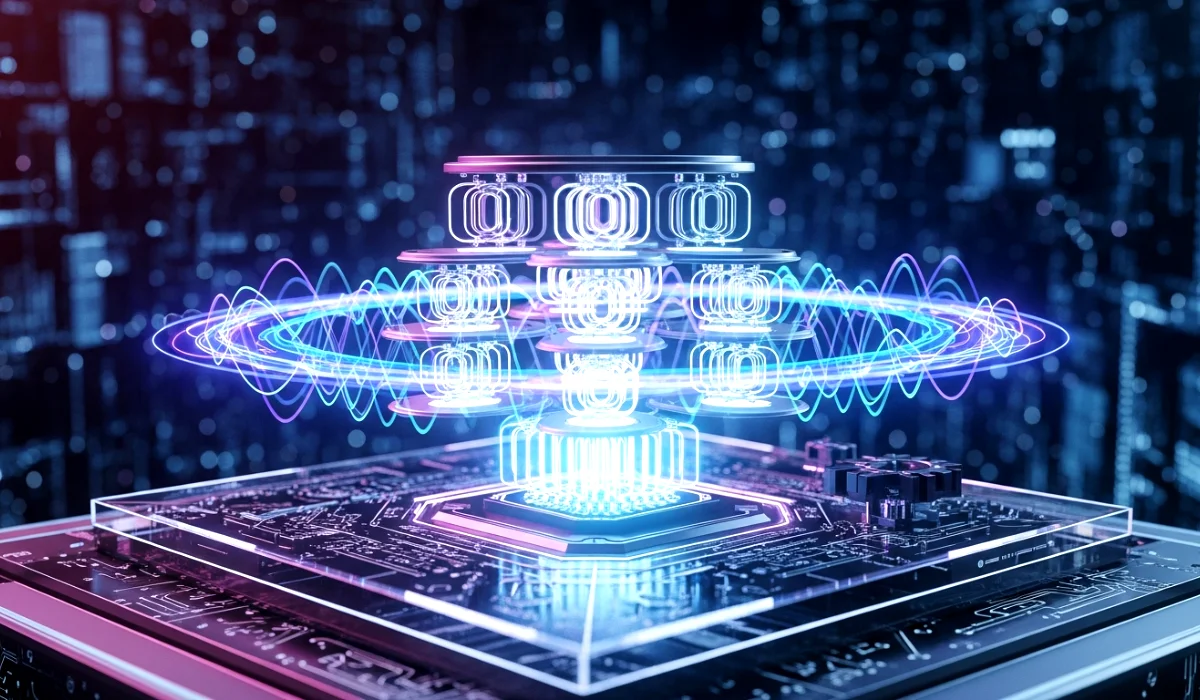
Have you ever looked at the world of technology and wondered if the big stuff, the game changing stuff, is happening somewhere behind the scenes in some hidden lab full of glowing wires and fancy machines? If yes, then you are already on the right path to understanding the spirit of quantum computing. People talk about it like magic. Some say it will change medicine. Others say it will make computers thousands of times faster. And some people think it’s just another buzzword.
But here is the truth.
Quantum computing is real, it is already here, and it is far more interesting than most people realize.
Today I am going to walk you through what quantum computing actually is in the simplest way possible. No confusing equations, no intimidating stuff, just clear explanations and easy to imagine examples. Think of this as a friendly chat where you and I sit with a cup of coffee and talk about one of the most powerful trends in modern technology.
So take a breath, relax, and get ready to explore the mind bending world of quantum computers.
Understanding Traditional Computers First
Before we get into quantum computing, it helps to understand what makes our everyday computers tick.
Your phone, laptop, smart TV, smartwatch, gaming console, everything uses a traditional computing system based on bits.
A bit is like a tiny electrical switch. It can be either:
- 0
- 1
Nothing more.
Everything from photos to videos to apps to PDFs is eventually converted into millions or billions of zeros and ones.
These tiny switches follow strict yes or no logic.
0 means off.
1 means on.
This system is simple, powerful, reliable, and easy to scale. But it also has a limit. Traditional computers can only process information in a step by step manner and follow logical patterns. That is perfect for normal tasks like browsing Instagram or watching Netflix. But when you want to solve extremely complex problems involving hundreds of possibilities at once, regular computers start struggling.
This is exactly where quantum computers come into the picture like superheroes sliding into the scene at the perfect time.
You can Also Read : Top 10 Tech Trends That Will Revolutionize The World in 2026
What Is Quantum Computing in Simple Words
Quantum computing is a completely new kind of computing that uses the rules of quantum physics. Instead of bits, quantum computers use qubits.
Here is the fun part.
A qubit can be:
- 0
- 1
- Or both 0 and 1 at the same time
Wait, what?
Both at the same time?
Yes. This strange ability is one of the biggest strengths of quantum computers. It comes from a quantum physics principle called superposition. If bits are like flat coins showing heads or tails, qubits are like spinning coins that can show both at once until they stop spinning.
This means a quantum computer can explore many possibilities at the same time instead of one by one.
Imagine you are trying to find a key inside a giant building with a thousand doors. A traditional computer opens one door, checks it, closes it, goes to the next door, checks it, and so on. A quantum computer can open many doors at the same time and quickly find the correct one.
That is why people say quantum computers can solve some problems incredibly fast.
How Quantum Computers Actually Work
Quantum computers rely on three key principles of quantum mechanics. These principles might sound complicated, but I will break them into easy examples.
1. Superposition
This lets qubits be in multiple states at once.
A normal bit is like a light switch.
A qubit is like a light dimmer that can be off, on, or anything in between, all at once.
This makes quantum computers powerful for exploring thousands or millions of possible solutions at lightning speed.
2. Entanglement
Entanglement is like a secret connection between qubits.
When two qubits are entangled, changing one instantly affects the other, even if they are far apart.
It is like you and your best friend wearing matching mood rings. If your ring turns blue, your friend’s ring also turns blue instantly no matter where they are.
This allows quantum computers to coordinate actions between qubits in ways classical computers cannot.
3. Tunneling
Quantum tunneling allows qubits to jump through energy barriers.
Think of it like this.
You reach a closed gate. A traditional computer tries to find the key or climb the gate.
A quantum computer simply walks through the gate as if it is made of air.
This ability helps quantum machines escape dead ends in complex problems.
Why Quantum Computing Is Such a Big Deal
You might wonder, why is everyone so excited? Why does Google, IBM, NASA, and every major tech company in the world invest billions into quantum computing?
It is because quantum computers can solve certain problems that are nearly impossible for classical computers.
Here are some areas where quantum computing shines.
1. Medicine and Drug Discovery
Quantum computers can simulate molecules at a deeper level than traditional computers.
This could help scientists design new medicines faster, find cures that currently take decades to discover, and reduce medical research costs massively.
Imagine curing diseases like Alzheimer’s more quickly or designing ultra targeted cancer treatments.
2. Cybersecurity
Quantum computing can break many of the encryption methods that protect our online world. That sounds scary, but quantum computers also help us build new quantum safe encryption.
Future cybersecurity will be built with quantum technology.
3. Artificial Intelligence
Quantum computers can improve machine learning by processing massive datasets much faster.
This could mean:
- Smarter robots
- Better recommendation systems
- More accurate weather predictions
- Faster language models
Many experts believe AI will jump to its next level through quantum power.
4. Climate Modeling
Quantum computers can simulate the atmosphere, oceans, and global temperature patterns more accurately, helping us predict climate changes and natural disasters.
5. Banking and Finance
Banks use complex models to detect fraud, manage risks, and predict market trends. Quantum computing can speed up these calculations dramatically.
6. Space Exploration
NASA is already using quantum computing to plan missions, understand materials used in spacecraft, and simulate space environments.
You can Also Read : Best AI Image Generators You Can Use for Free in 2025
Quantum Computers Are Not Here to Replace Your Laptop
There is a common misconception that quantum computers will replace traditional computers.
That is not true.
Quantum computers are built to solve specific problems that classical computers cannot solve quickly. Your smartphone or laptop is much better at daily tasks like:
- Browsing the internet
- Running apps
- Watching videos
- Editing documents
Quantum computers are more like super specialized machines designed for heavy, complex calculations. They will exist alongside classical computers, not replace them.
It is like comparing a calculator to a rocket navigation computer. Both are useful, but they do completely different things.
Real World Examples of Quantum Computing Right Now
Many people think quantum computing is science fiction, but companies are already using it today.
Here are some real examples:
Google Quantum AI
Google created a quantum computer called Sycamore. In one experiment, it performed a task in 200 seconds that would take a classical supercomputer around ten thousand years.
IBM Quantum
IBM gives developers free access to quantum computers through the cloud. Anyone can experiment and learn how to write quantum programs.
NVIDIA
NVIDIA uses quantum inspired algorithms to speed up AI tasks.
Volkswagen
They use quantum computing to optimize traffic flow in large cities.
JP Morgan
Banks use quantum algorithms to improve fraud detection and portfolio management.
Quantum computing is not the future. It is already happening.
A Simple Example to Understand Quantum Computing
Imagine you have a maze with 100 paths. Only one of those paths leads to the treasure. A classical computer tries each path one by one. A quantum computer checks many paths simultaneously. This is the best way to visualize the strength of quantum computing.
Here is another way to think of it.
Traditional computers are like reading a book from start to end.
Quantum computers are like scanning the entire book instantly to find the right answer.
That is why researchers are so excited about quantum technology.
Challenges of Quantum Computing
Even though quantum computing is powerful, it also has challenges.
1. Qubits are unstable
Qubits lose their state easily. Heat, vibration, or simple noise can disturb them.
2. Machines require extremely low temperatures
Quantum machines need temperatures colder than outer space to function.
3. Quantum programs are hard to write
Quantum programming languages are still in early stages.
4. Expensive technology
Quantum machines cost millions and require large labs.
But just like early computers took time to evolve, quantum machines will also become smaller, cheaper, and more user friendly.
The Future of Quantum Computing
So where is this going?
Experts believe that the next ten to twenty years will be the era of quantum transformation.
Here are the biggest future predictions:
- Quantum computers will become part of cloud services.
- Quantum encrypted communication will become standard.
- AI models will run on quantum powered systems.
- Space missions will use quantum navigation.
- Drug discovery speed will increase.
- Climate models will become extremely accurate.
Quantum computing will not replace today’s computers, but it will reshape industries.
If you are a student, entrepreneur, investor, or tech lover, this is the perfect time to learn about it.
Conclusion: Quantum Computing Is the Next Big Leap in Technology
Quantum computing is not just a more powerful computer. It is a completely new way of thinking about information. With qubits, superposition, entanglement, and quantum logic, these machines can solve problems that would take classical computers centuries.
From medicine to fraud detection to AI to climate science, the potential applications are enormous. And even if it feels mysterious right now, the basics are actually simple once you grasp the concept of qubits and superposition.
You do not need to be a scientist to understand the impact. All you need is curiosity and the willingness to explore new technology. So the next time someone asks you what quantum computing is, you can explain it confidently and maybe even inspire them to learn more.
If you enjoyed this explanation and want more beginner friendly guides on advanced tech topics, let me know in the comments or reach out anytime.
Knowledge grows when we share it.



It’s amazing how far quantum computing has come in such a short time. What really stands out is how it could vastly accelerate problem-solving in fields like healthcare, making it feel a lot less like science fiction and more like the next step in tech.