
Can AI Really Replace Coders in 2026 A Practical View

If you have ever stared at your screen and watched an AI tool spit out lines of code faster than you can type a single function, you might have whispered that scary question in your mind. Can AI really replace coders? I remember the first time I asked myself that. I was debugging a simple website feature and my AI assistant fixed it in seconds. I sat there holding my coffee, wondering if I should start planning a career change or embrace this new world.
That moment stayed with me. Not because I feared losing my job, but because I realized we are living through a huge shift in how software gets built. And like every shift, it brings confusion, hype, excitement, and a lot of myths. So if you are here trying to understand what 2026 might look like for programmers, whether you are a beginner, a student, or an experienced developer trying to stay relevant, let us sit down and unpack this like two friends talking honestly.
Now, let us get into the big question. Can AI really replace coders?
You can also read : AI Tools That Replace 10 Boring Daily Tasks And Save Your Sanity
Why Everyone is Asking If AI Will Replace Coders
I get this question every week. Friends, readers, cousins who want to learn coding, even business owners who think AI will let them fire developers. The curiosity comes from three major shifts happening all around us.
First, AI coding tools are extremely fast now. They write boilerplate code, debug errors, generate apps from prompts, and even suggest better architecture choices.
Second, tech companies are aggressively pushing AI into every workflow they can. That includes software development, product design, and testing.
Third, social media loves drama. You have probably seen posts claiming coding is dead, software engineers will disappear, and AI will run everything.
But here is the truth that most people ignore. Coding is not only about typing instructions. It is about thinking, planning, understanding problems, designing systems, communicating with teams, and making decisions. AI can help with coding, but it is not taking over everything. At least not by 2026.
Let me take you through what AI can do today, where it fails hard, and what the next two years will realistically look like.
What AI Can Already Do in Coding
Let us be honest. AI is incredibly good at many parts of software development. If you have used any modern AI coding assistant, you already know what I mean. Let us break down some things AI handles surprisingly well.
1. Writing Boilerplate Code
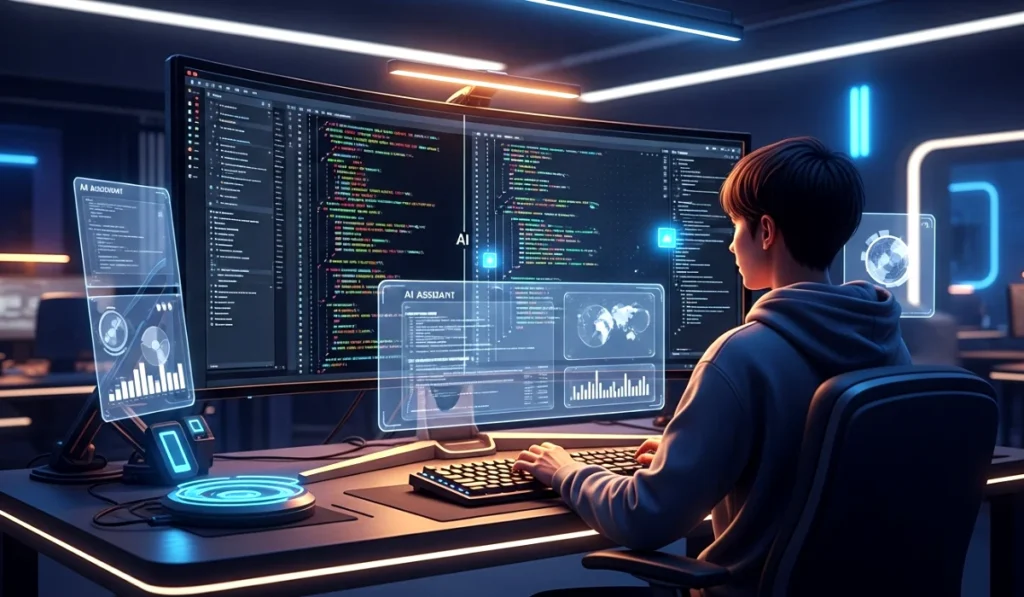
You know those repetitive tasks like creating forms, making CRUD APIs, setting up routes, or generating simple components? AI tools handle them with ease. They reduce hours into minutes and allow developers to skip the boring parts. Especially for beginners, this feels magical.
2. Debugging Common Issues
AI finds typos, missing imports, syntax mistakes, and broken logic faster than most humans. I once had a bug that took me two hours to find. AI found it in less than thirty seconds. That does not mean it understands the entire project, but it is excellent with pattern based errors.
3. Suggesting Code Improvements
Want more efficient code? AI is great at refactoring. It can reduce long functions into smaller ones, improve readability, or offer alternative approaches. It is like having a helpful senior developer sitting beside you.
4. Helping Beginners Learn Faster
Students who once struggled with error messages or complex concepts now learn with interactive examples generated by AI. It is like having a personal tutor available day and night.
5. Speeding Up Prototyping
Imagine wanting to test a new app idea. AI can generate a working prototype in a few hours. For entrepreneurs and indie hackers, this is a huge advantage.
With all that said, you might be thinking AI is unstoppable. But here is the twist.
Where AI Still Struggles Badly
AI is strong in some areas but fails dramatically in others. And these weaknesses are the reason coding jobs are not going anywhere soon.
1. AI Has No Real World Understanding
AI does not actually know what your business wants or what your users need. It only predicts patterns based on data. If you ask it to build a custom system with special conditions, it might get confused or create something that looks right but does not function correctly.
A friend of mine once asked AI to write a payment system. It created a beautiful structure but forgot half the security requirements. That is the problem. AI sounds confident even when it is wrong.
2. AI Cannot Make Complex Architectural Decisions
Software architecture is not a one size fits all thing. You need real experience to understand scalability, user behavior, future expansion, database structure, and security. AI cannot predict the future, cannot see your business goals, and cannot create long term strategies.
3. AI Gets Lost in Large Projects
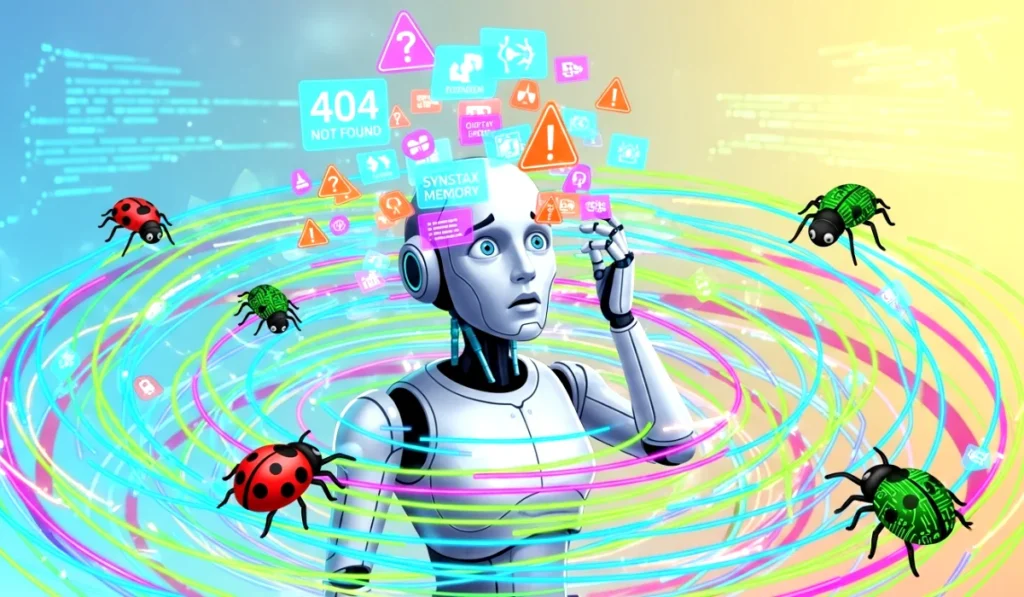
Try giving AI a five thousand line project and ask it to change something across multiple files. Sometimes it works, often it breaks something else. AI is still not great at understanding entire codebases the way human developers do.
4. AI Cannot Replace Human Creativity
Innovation comes from understanding people, emotions, frustrations, and dreams. No AI knows what it feels like to use a buggy app or the joy of solving a problem after hours of thinking. Creativity is still a human superpower.
5. Companies Still Need Accountability
If a product breaks, who is responsible? The AI? No. The developer. Companies need humans who understand the code, can take ownership, and solve issues during crises.
These weaknesses highlight something important. AI might replace some tasks, but not the coder mindset.
What Coding Jobs Will Look Like in 2026
Now let us take a realistic look at 2026 because the landscape is shifting.
More Companies Will Use AI First Workflows
Developers will work side by side with AI tools, not compete with them. Think of AI as a turbocharged assistant that takes care of repetitive tasks while humans focus on thinking and strategy.
Junior Developers Will Have New Responsibilities
Entry level jobs will evolve. Instead of writing boilerplate, juniors will focus more on:
- Testing AI generated code
- Validating logic
- Managing tools
- Working on features that require nuance
- Understanding user needs
Junior devs are not disappearing. They are transforming.
Senior Developers Will Become Even More Valuable
Seniors will guide AI, make decisions, design architectures, and solve complex problems. Companies will rely on them to maintain quality.
Low Code and No Code Will Grow
AI powered platforms will make simple apps easy to build without deep coding skills. But complex systems will always require real developers.
Freelancing Will Explode
Entrepreneurs, small businesses, and creators will need specialists who can build custom features quickly with the help of AI. Freelancers who know how to use AI effectively will earn more.
So once again, can AI really replace coders in 2026? Not likely. But coders who refuse to learn AI tools might fall behind. That is the real risk.
How Beginners Should Prepare for the Future
If you are just starting your coding journey and feeling scared, trust me, you are not alone. But fear is not the answer. Preparation is. Here is what will matter most.
Learn Problem Solving, Not Just Syntax
AI can write syntax. But problem solving is what separates beginners from real developers. Practice breaking problems into smaller parts. Learn how systems work. Understand logic flow.
Use AI Tools to Speed Up Learning
Instead of fighting AI, use it. Ask questions. Generate examples. Compare solutions. You will learn faster than coders did ten years ago.
Understand How Projects Work End to End
Learn version control, testing, deployment, APIs, authentication, and databases. These are areas AI struggles with. Humans who master them will always be in demand.
Pick One Strong Skill
In 2026, specialists will be more powerful than generalists. Whether it is backend, frontend, AI engineering, cybersecurity, or cloud, pick a direction and go deep.
Stay Curious and Adaptable
Tech changes fast. But people who adapt never fall behind. Read, experiment, build projects, and stay open to new tools.
Final Thoughts on the Future of Coders and AI
So, can AI really replace coders? Not in 2026, and not in the way people fear. What AI is doing is reshaping the way we work. It is taking away the boring parts and giving developers more time to think, create, and innovate.
I believe coding will become more accessible. More fun. More collaborative. And people who embrace AI instead of fearing it will thrive. You will not be replaced by AI. But you might be replaced by a person who knows how to use AI better than you.
So my advice is simple. Learn coding. Learn AI. Use them together. And build the future with confidence.
If you enjoyed this deep dive and want a part two about coding jobs in 2030, let me know and I will write it for you.
Your next step?
Write your first small program today and use AI to help you. The best way to predict the future is to start creating it.

I agree with the idea that AI won’t replace coders entirely by 2026. The real question is whether AI can enhance how we build software, rather than just automating everything. That’s where the real future lies!